

The Conversation Nobody Wants to Have: How to Talk to Your Parent About Moving
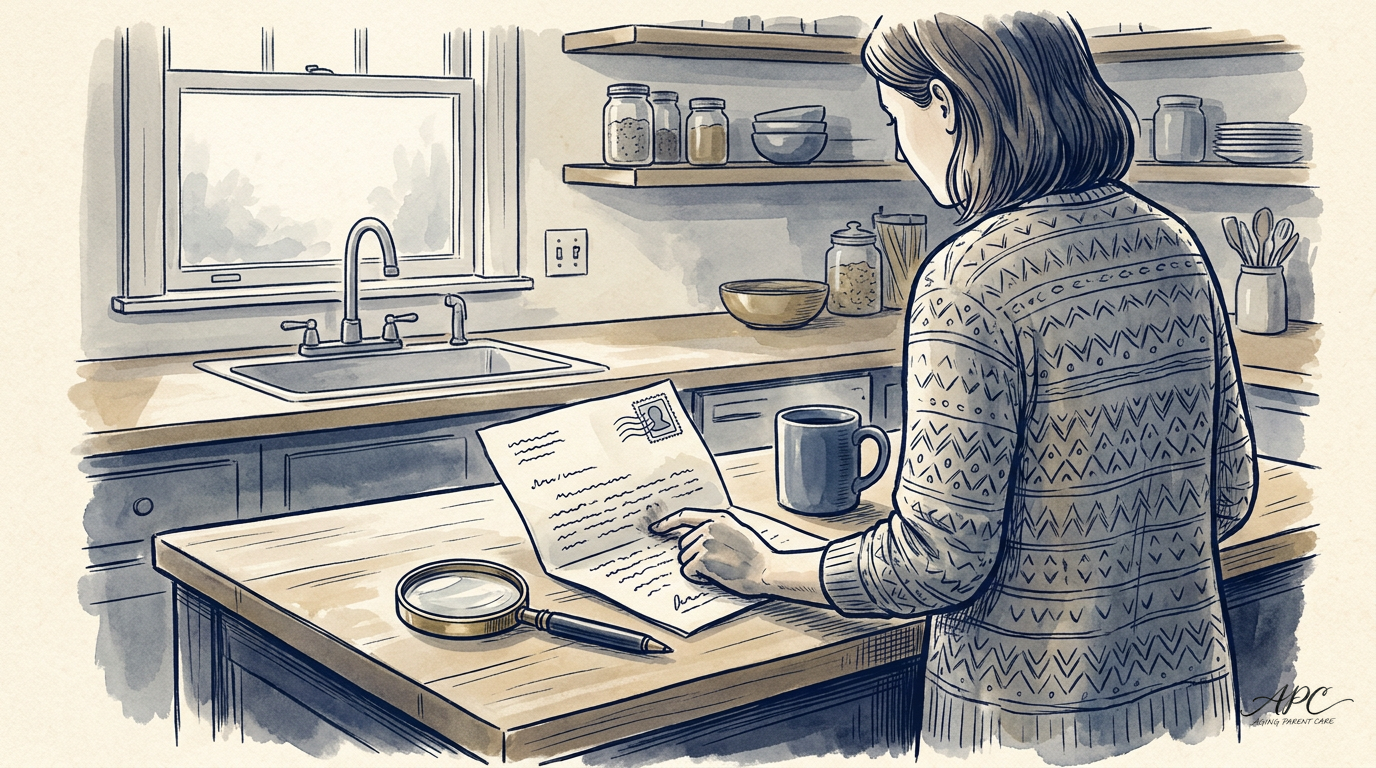
The refrigerator tells the story before anyone's ready to hear it. Three identical cartons of milk, two expired. A freezer full of microwave dinners stacked sideways because the shelves were removed and never put back. A bruised apple in the crisper drawer that's been there since February.
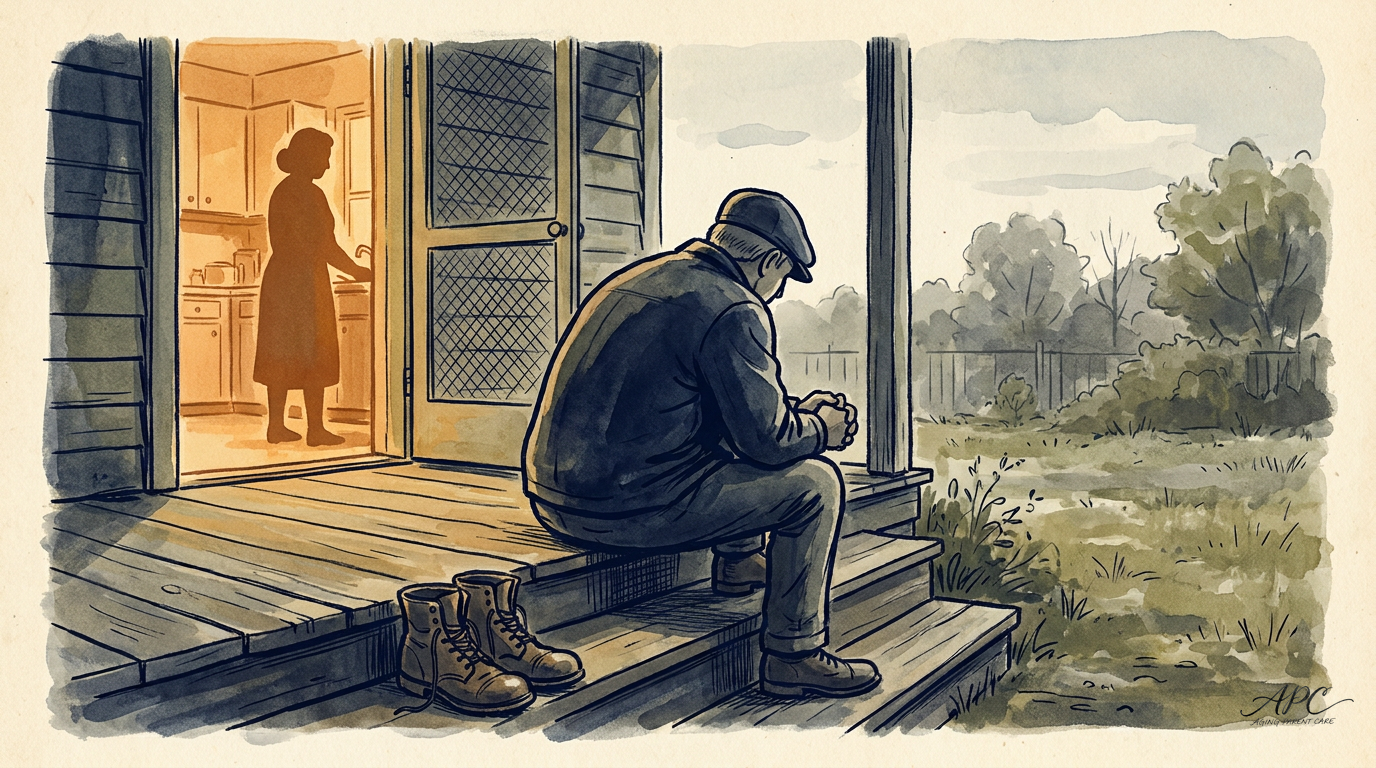
David Restrepo noticed his father's refrigerator on a Saturday visit in March. He drove home to Portland, sat in his driveway for twenty minutes, and didn't go inside. He knew what the refrigerator meant. He wasn't ready to say it out loud.
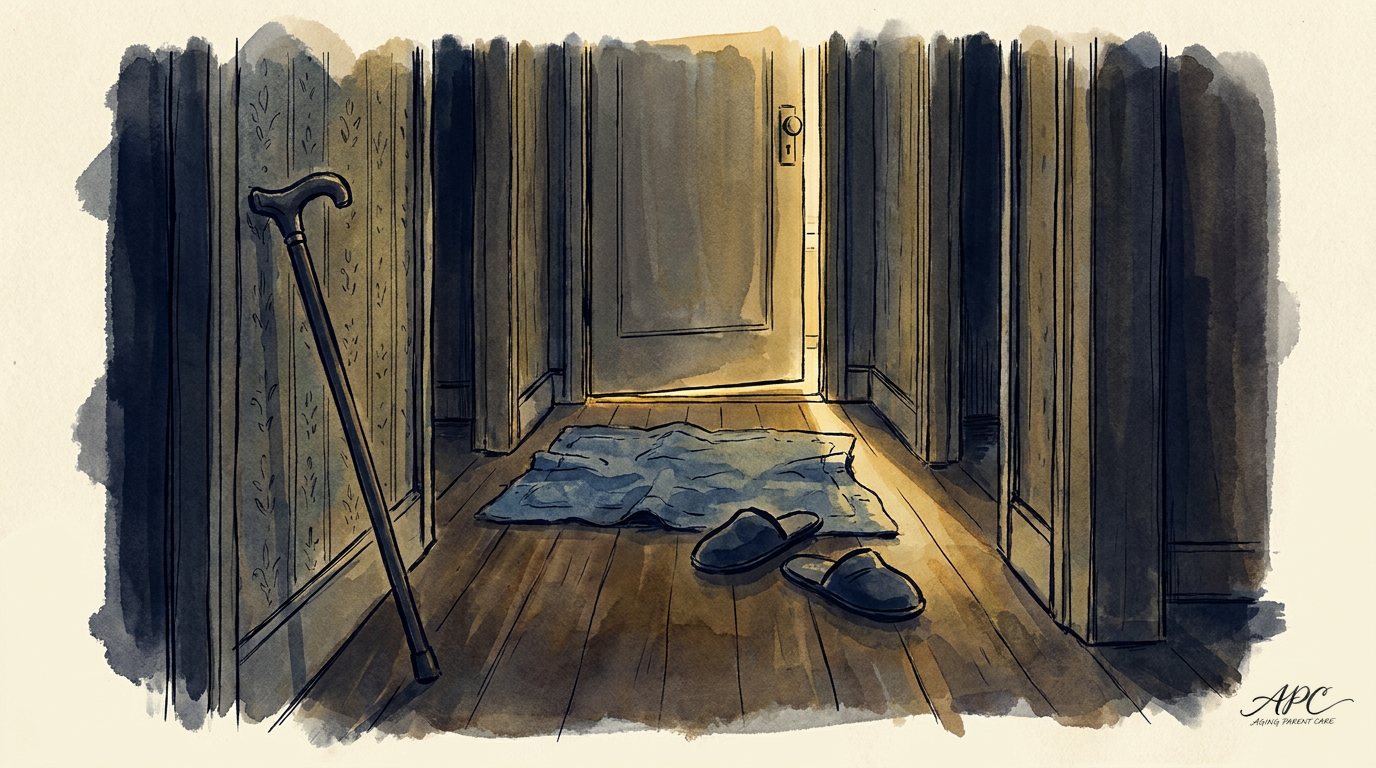
That silence cost four months. In July, his father fell in the bathroom at 2 a.m. A neighbor heard the noise and called 911. He spent six days in the hospital and three weeks in rehab.4 The conversation David couldn't start in March happened in a hospital room in July, under the worst possible conditions.
How to open the conversation about moving
- Frame it around safety and quality of life, not a move that's already decided.
- Keep the first conversation short: fifteen minutes, one specific observation.
- Listen more than you talk, then let the idea breathe for a week or two.
- Bring real numbers when specifics come up, and offer choices instead of ultimatums.
- A neutral geriatric care manager can break a months-long impasse.
Why Families Wait
Here's the pattern most families fall into. The conversation gets put off because it feels like betrayal, like telling a parent they've failed at living independently, like stealing something. So it waits until a fall, a fire, a medication crisis, or a wandering incident forces it into a setting where nobody has time to think clearly.
There's a better way. It isn't painless. It's still better.
How to Open the Door
Start with what the conversation actually is. It isn't a request to move. Not yet. It's a conversation about safety and quality of life, and it may or may not end with a move. Framing carries more weight than most people expect. "We need to talk about putting you somewhere" is a door-closer. "I want to make sure you're safe and comfortable, and I need your help figuring out what that looks like" is a door-opener.
The first conversation should be short. Fifteen minutes, not an hour. Bring one specific observation, not a list of grievances. "Dad, I noticed you haven't been cooking much. How are you feeling about managing meals?" That's enough. This conversation doesn't solve anything. It establishes that the topic exists and that it's safe to discuss.
Skip the ambush. No siblings brought along as reinforcements on the first conversation, no printed brochures. Those tactics feel like an intervention, and interventions trigger defensiveness. A parent has spent decades making their own decisions. The moment this feels like a committee overriding their autonomy, the conversation is lost.
Listen Before You Plan
Listen more than you talk. A parent's resistance isn't irrational. Fear sits underneath it: fear of losing their home, their neighborhood, their routine, their privacy, their sense of self. Those fears deserve respect, not management. "I'm fine" often stands in for something closer to "I'm afraid of what happens if I admit I'm not." That's the thing to hear.
"I'm fine" often means "I'm afraid of what happens if I admit I'm not."
After the first conversation, wait. A week, maybe two. Let the idea breathe. Then come back with a question, not a plan. "Have you thought any more about what we talked about? I've been thinking about it too." This signals that the conversation is ongoing, not a one-time verdict.

When You Get to Specifics
When the conversation moves to specifics, bring information without pressure. Assisted living in the United States averages between $5,300 and $6,300 per month in 2026, with costs rising approximately 4.4% year over year.1 That range varies enormously by region. A facility in rural Ohio might cost $3,800; one in San Francisco might cost $9,500. The Genworth Cost of Care Survey provides state-by-state and city-level data. Knowing the numbers for a parent's preferred area ahead of time helps.
Offer choices, not ultimatums. "Would you want to look at a few places, just to see what they're like?" is different from "We've picked a place and the move-in date is next month." Even when the situation is urgent, involving a parent in the selection preserves dignity. Let them veto a place. Let them have opinions about the dining room or the garden or the distance from their church. Those opinions are a person asserting that they still get to choose, and that matters more than square footage.2
Senior living search and comparison tools
A service category that lets families compare assisted living and care options by area, price range, and amenities, so the numbers and choices are clear before a tour.
A recommendation slot for a related tool. We may earn a commission, never on a recommendation. This space is reserved and is not yet live.
Talk About the Money
Address the money directly. Many families dance around cost, which creates anxiety on both sides. Be specific. "Here's what your savings and income cover. Here's what the gap looks like. Here's how we can close it." Long-term care insurance, VA benefits for veterans, Medicaid for those who qualify, and bridge strategies like renting out the family home are all worth discussing.6 The financial conversation is hard. Ambiguity is harder.
When conversations stall, bring in a neutral third party. A geriatric care manager (sometimes called an aging life care professional) can assess a parent's needs independently and present options without the emotional charge that comes from a child telling a parent what to do. The Aging Life Care Association maintains a directory at aginglifecare.org.5 Sessions typically cost between $150 and $400 per hour, and even one or two meetings can break a months-long impasse.
Say What You Feel
Name the feelings on your own side too. "This is hard for me. I don't want you to think I'm pushing you away. I'm scared that something will happen and I won't be there." Vulnerability disarms defensiveness. A parent needs to know this conversation costs the other person something. That shared difficulty is the ground a decision gets built on.
Here's the truth no brochure will tell you: there's no version of this conversation where everyone feels good. A parent may cry. So may their child. Siblings may disagree. The first attempt may end in silence or anger. That's normal. The conversation isn't a single event. It's a series of small, honest exchanges that gradually build toward a decision made together.
David Restrepo eventually moved his father into a small assisted living community in Tigard, Oregon, eight minutes from David's house. His father resisted for weeks, then agreed to a trial month, then asked to stay. He eats dinner in a communal dining room now. He hates the decaf coffee and says so every morning.
That complaint, small and specific and his, is the sound of someone who still gets to have opinions about his own life. The conversation didn't take that away. It made space for it.
The conversation about moving works best as a series of short, honest exchanges, framed around safety and led by listening, long before a crisis forces it. Bring real numbers, offer real choices, and bring in a neutral care manager if it stalls.
Sources
- Genworth Financial. 2025 Cost of Care Survey.
- AARP. How to Talk to Your Aging Parent About Moving.
- National Institute on Aging. Aging in Place: Growing Older at Home.
- CDC. Older Adult Falls Data.
- Aging Life Care Association. Find an Aging Life Care Professional.
- Family Caregiver Alliance. Housing Options for Older Adults.
This article is for educational and informational purposes only. It does not constitute medical, legal, or financial advice. Always consult qualified professionals for guidance specific to your situation.
© 2026 Aging Parent Care. All rights reserved. No portion of this article may be reproduced, distributed, or used in any form without the explicit written permission of Aging Parent Care.
Make Your Business Online By The Best No—Code & No—Plugin Solution In The Market.
30 Day Money-Back Guarantee
Say goodbye to your low online sales rate!