
54% of Caregivers Wish They Had Started Sooner. Here's Your 15-Minute Head Start.
Tom Brennan noticed the milk on a Sunday in September.
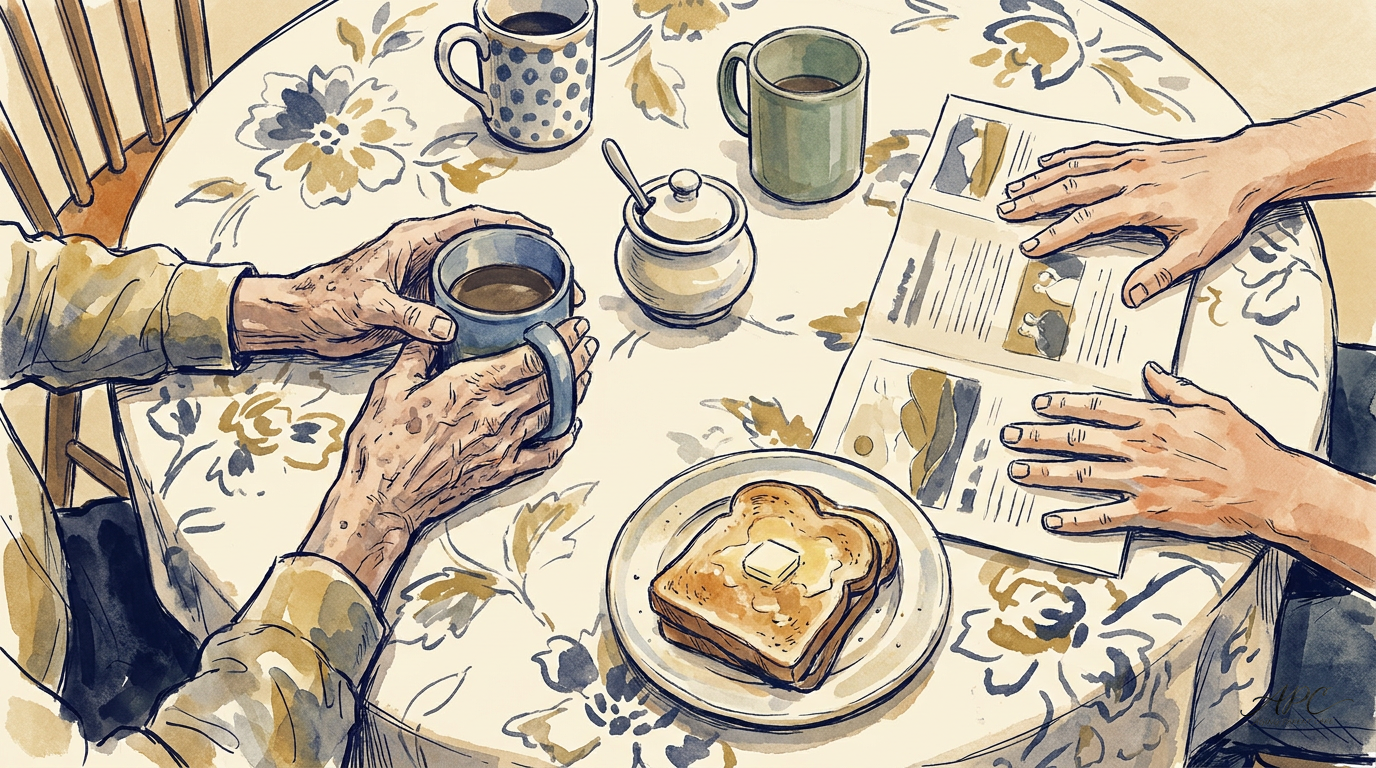
He had driven up to his parents' house in Danbury the way he did most weekends, to mow the lawn, check the gutters, and eat whatever his mother insisted on cooking despite being eighty-one with shot knees. This particular Sunday, he opened the refrigerator for a beer and found four gallons of milk. Two were past their expiration date. He asked his mother about it. She waved him off. "They were on sale."
Tom let it go. He drank his beer, mowed the lawn, drove home. But the milk stayed with him like a pebble in a shoe. His mother had kept a precise kitchen for sixty years. She did not buy four gallons of milk.
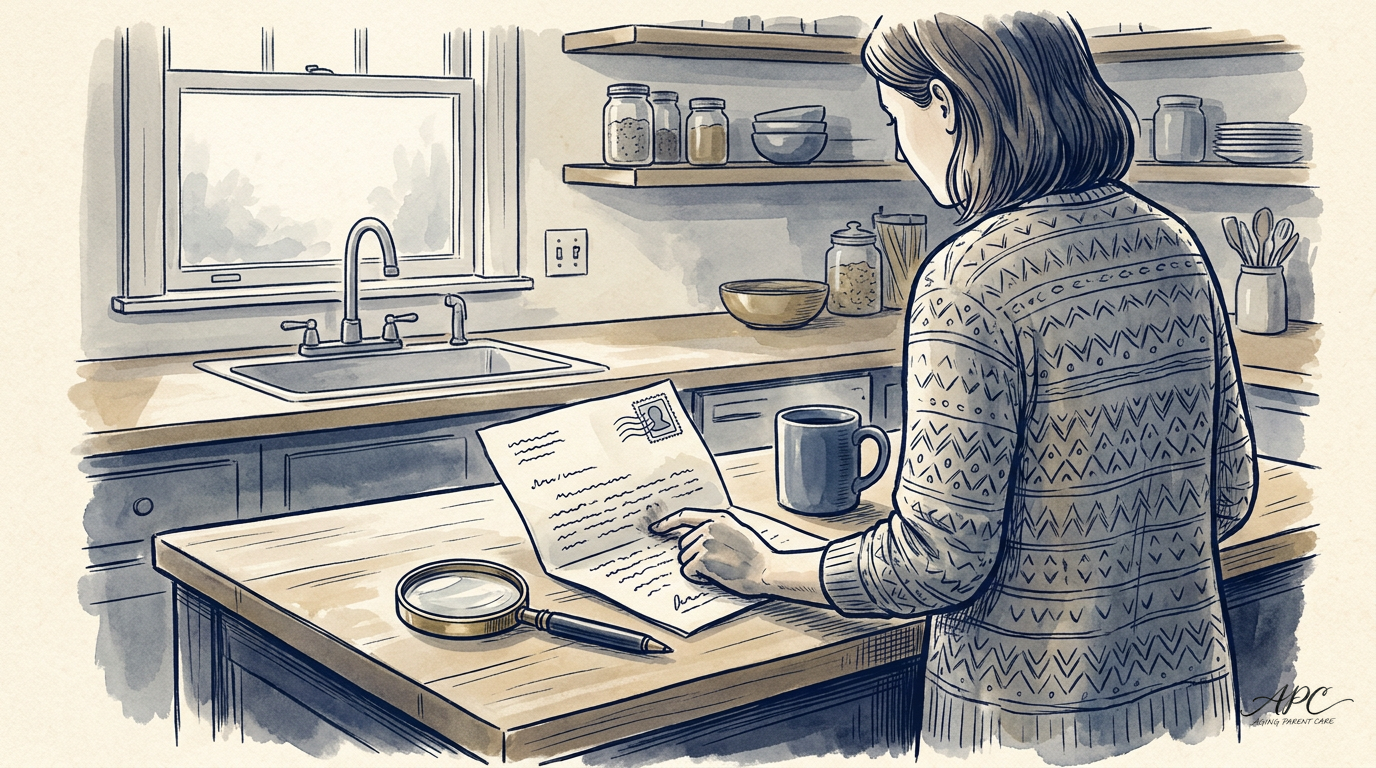
Three weeks later, on another Sunday, he found the electric bill on the kitchen counter, sixty days past due. His father, who had always handled the bills, was sitting in his recliner watching the Weather Channel, the television turned up very loud.
That was the moment. Not a fall or a fire. Just a stack of milk and an unpaid bill. And I thought, something is happening here.
Tom Brennan
Tom is fifty-three. He works in commercial insurance, has two teenagers and a wife who runs a physical therapy practice. Nothing in his background prepared him for this. No training in elder care, no idea what the first step was supposed to be. All he had was a refrigerator full of milk and a feeling in his gut he could not quite name.
The space between noticing and acting
54% of family caregivers say they wish they had started planning sooner. That number comes from a 2024 AARP survey, and it raises an obvious question: sooner than what?1
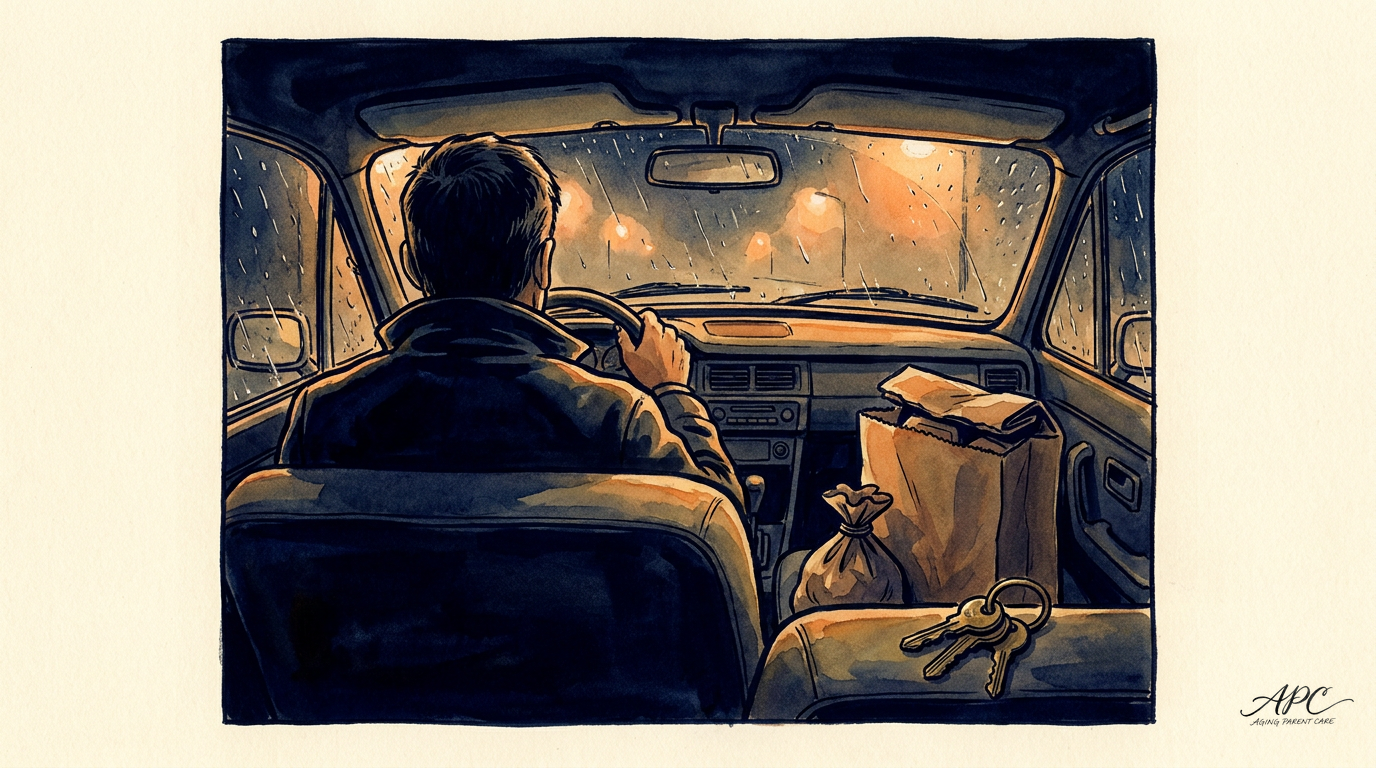
Sooner than the crisis. Sooner than the ER visit, the fall, the wandering incident, the call from a neighbor who found a parent confused in the driveway at ten o'clock at night. Families who wish they had started sooner are not talking about weeks. They are talking about months, sometimes years, of recognizing signs and explaining them away.
He's just tired. She's always been forgetful. Everyone misplaces things. The car has a new dent and nobody mentions it.
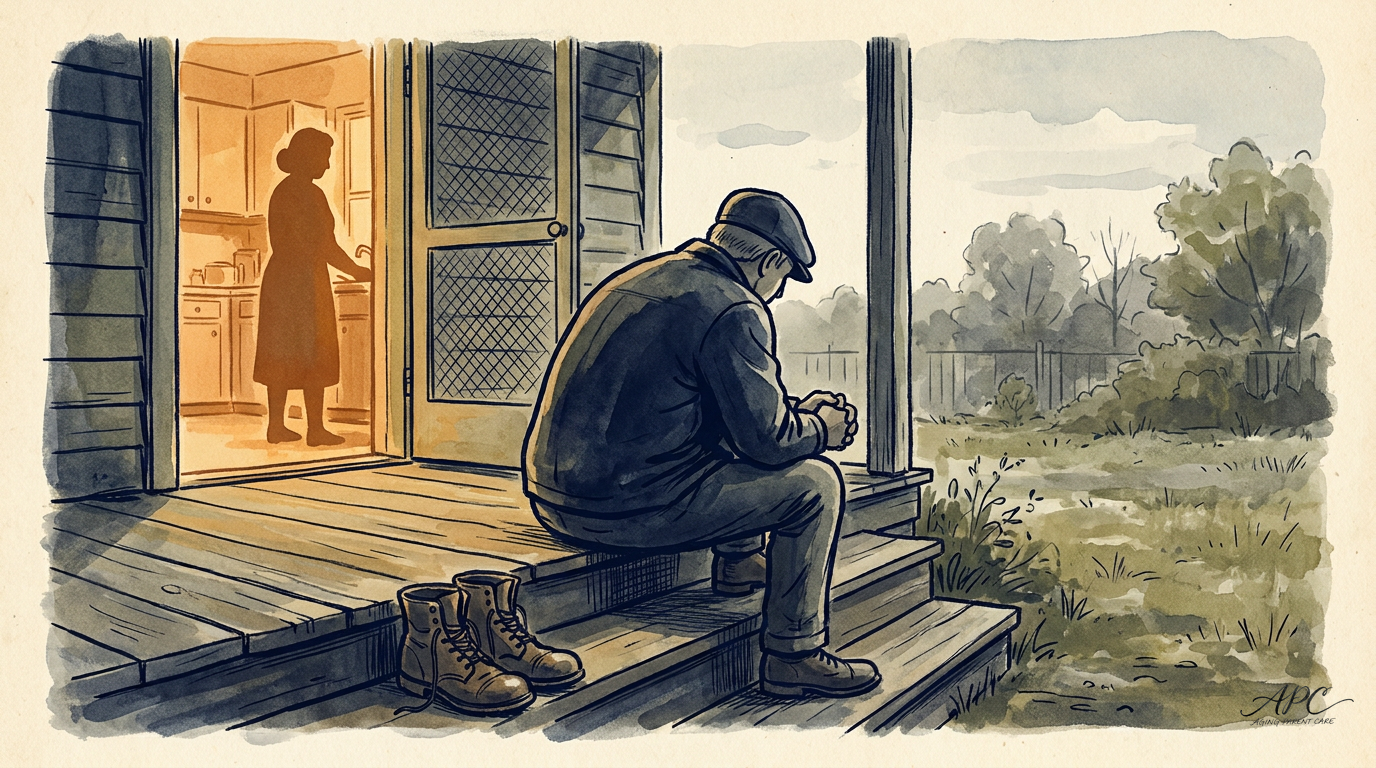
Every one of those explanations might be true. Every one might also be the early edge of something that will demand far more attention within a year. The space between noticing and acting is where most families lose time. Not from laziness, and not only from denial, but because there is no clear first step. No door marked Start Here. Only a vague sense that something should be done, set against everything else already competing for the day.
The cost of the gap
The financial cost of waiting is concrete and measurable. Assisted living averages $6,313 per month, and Medicare covers none of it.3 Medicaid waivers carry waitlists that can stretch two to three years, and families who get on those lists early gain a financial advantage that is nearly impossible to replicate once the crisis has arrived.4
The emotional cost is harder to measure and usually worse. Care decisions made in crisis mode turn every option into a betrayal of something, a choice between bad and worse, made while exhausted and scared, often with family members who disagree on what the right thing looks like. 87% of caregivers report significant stress.5 The families who report the least regret are the ones who started before they had to.
Three five-minute moves to make this week
- The medication list. Names and dosages, saved in a phone, ready for the ER.
- The document questions. Five things you cannot currently answer, written down.
- The observation. The one thing you noticed, dated, as the start of a timeline.

Fifteen minutes
Tom Brennan did not become a full-time caregiver on the Sunday he found the milk. He did not have a difficult conversation, research facilities, or call a lawyer. He did one thing, and it took five minutes.
He called his mother that Tuesday, said he was updating his emergency contacts, and asked what medications his father was taking. She listed four. He wrote them in his phone with the dosages, then looked up his father's primary care doctor and saved that too. That was it. Five minutes. One note. It felt almost trivial.
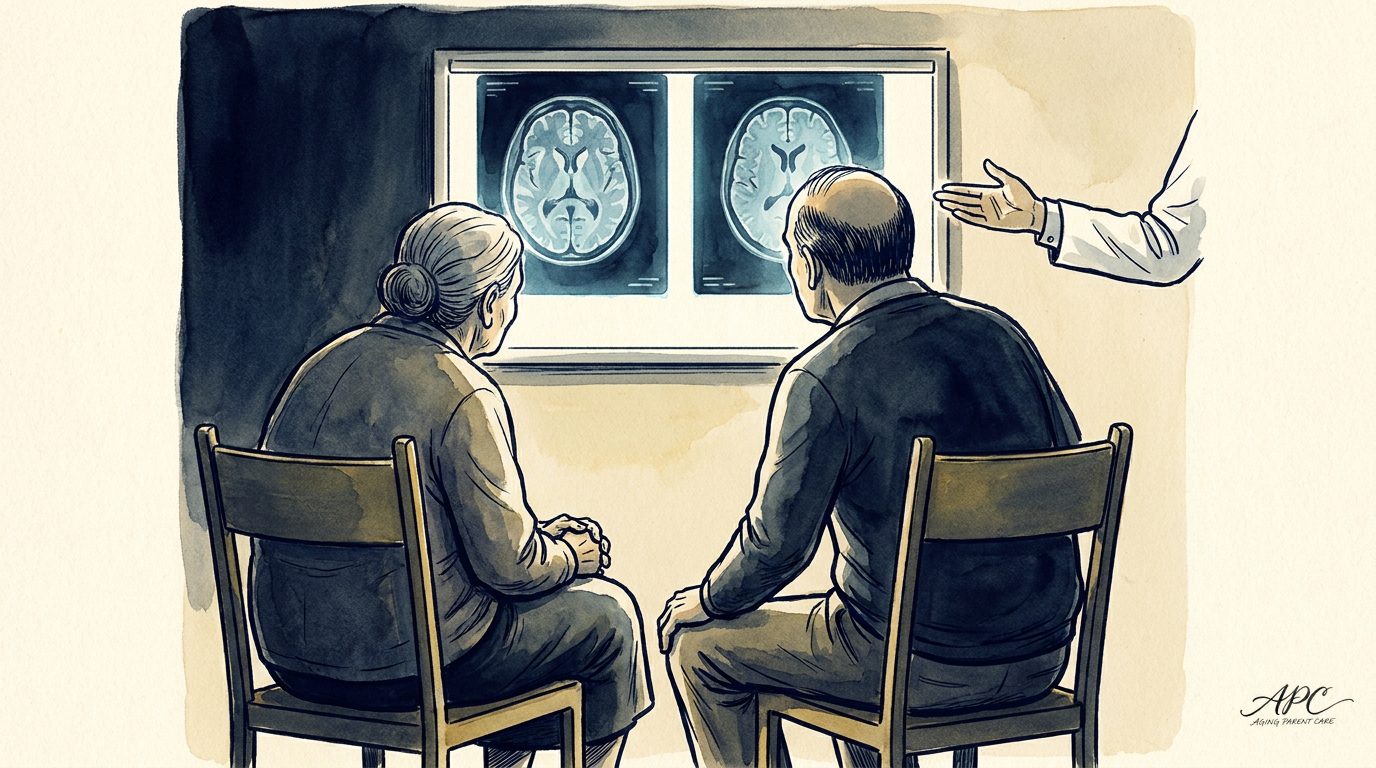
Eight months later, when his father had a TIA and ended up in the emergency room at Danbury Hospital, the first thing the attending physician asked was what medications he was on. Tom pulled out his phone and read the list. The doctor nodded and moved on. The family in the next bay was trying to reach a pharmacy at nine o'clock at night for the same information.
That list probably saved us three hours. And I'm not sure it didn't save his life.
Tom Brennan
A medical-info organizer for medications and documents
Where we land on the simplest way to keep a current medication list and key documents in one place, with the trade-offs stated plainly.
A recommendation slot for a related tool. We may earn a commission, never on a recommendation. This space is reserved and is not yet live.
Three options, five minutes each
The hardest part is admitting that what is being noticed is not nothing. The second hardest is the first action. Here are three, each small enough to do today.
- The medication list. Call a parent, find a casual reason, ask what they are taking. Write it down with dosages and save it in a phone. When the ER asks, and statistically it will, the answer is ready. Tom's list at Danbury Hospital likely saved his father three hours of confusion and a dangerous drug interaction.
- The document questions. Write down five questions that cannot be answered right now. Where is the will? Is there a power of attorney? What is the health insurance policy number? Where are the financial documents? Is there an advance directive? The point is not answers today, but knowing the shape of what is unknown.
- The observation. In one sentence, record the thing that prompted the concern. "Dad told the same story three times at dinner." "Mom had four gallons of milk." Date it and save it. If things progress, this note becomes the start of a timeline, and timelines are what doctors ask for and families argue about.
What happens next
Nothing dramatic, which is the entire point. One piece of information exists today that did not exist yesterday. Tomorrow can bring another, or a week can pass. The door is open, and its location is known.
54% of the people who walked this road before are saying clearly that early beats ready. The milk got noticed. The bill got noticed. Fifteen minutes is plenty.
Most families lose time in the gap between noticing the warning signs and taking a first step. Three five-minute moves, a medication list, five document questions, and one dated observation, turn that gap into a head start.
Sources
- AARP Research. Family Caregivers Survey 2024.
- National Alliance for Caregiving and AARP. Caregiving in the U.S. 2020.
- Genworth Financial. Cost of Care Survey 2024.
- KFF. Medicaid Home and Community-Based Services.
- CDC. Caregiving for Family and Friends: A Public Health Issue.
- National Institute on Aging. Getting Your Affairs in Order.
This article is for educational and informational purposes only. It does not constitute medical or financial advice. Always consult qualified professionals for guidance specific to your situation.
Make Your Business Online By The Best No—Code & No—Plugin Solution In The Market.
30 Day Money-Back Guarantee
Say goodbye to your low online sales rate!