


43% of Caregivers Have No Backup. How to Build a Care Team When You Are the Only One.
Marta Jimenez hasn't slept past 6 a.m. in fourteen months. Her mother, who has moderate Parkinson's disease, needs help getting out of bed and getting dressed before making it to the bathroom. Marta does all three before her first cup of coffee. She does them again at midday. And again before bed.
Marta has one brother. He lives in Denver. He calls on Sundays.
She doesn't have a care team. She has herself.
The 43% Problem
According to a 2026 report compiled by Stacker from National Alliance for Caregiving data, 43% of family caregivers in the United States are the sole provider of care.1 No sibling rotation. No hired aide. No backup plan. When a solo caregiver gets sick, the system doesn't pause. It frays.
One person can't provide 24-hour coverage indefinitely. That's not a moral failing. It's arithmetic. And a care team doesn't require money most families don't have. It requires knowing where to look.
Where to find help, starting today
- Eldercare Locator. 1-800-677-1116 or eldercare.acl.gov connects you to your county Area Agency on Aging.
- Respite care. The ARCH National Respite Network lists free and sliding-scale programs by state.
- VA support. The Caregiver Support Line is 1-855-260-3274 for families of eligible veterans.
Start With Your Area Agency on Aging
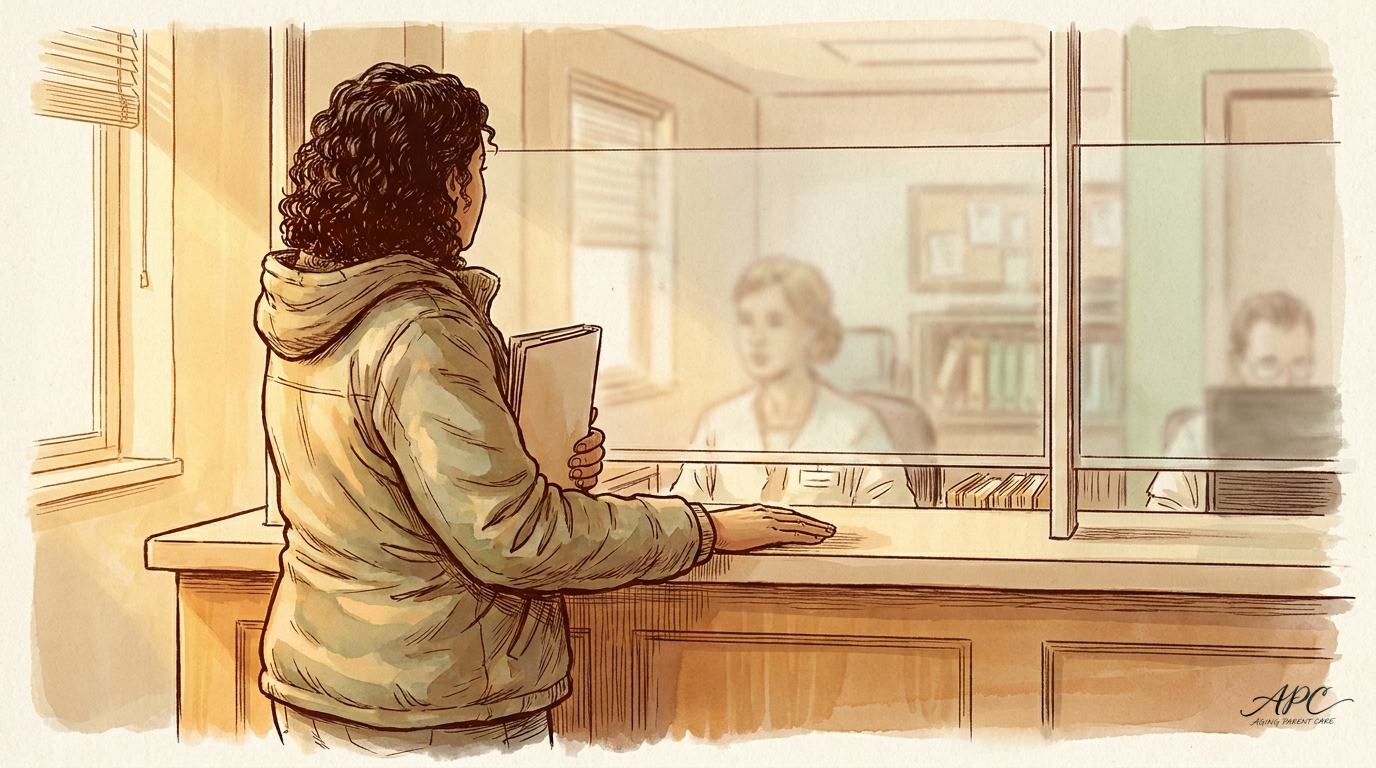
There's one in every county in the United States, and most people have never heard of theirs. The Eldercare Locator (eldercare.acl.gov or 1-800-677-1116) connects families to the right one by zip code.3 These agencies coordinate free and low-cost services: meal delivery, transportation to medical appointments, home modification assessments, plus caregiver respite. They're funded through the Older Americans Act, which means the services exist whether a parent qualifies for Medicaid or not.2
Respite Care: The Lifeline Few Families Know About
Respite care is the lifeline most solo caregivers don't know they can access. The ARCH National Respite Network (archrespite.org) maintains a locator for respite programs by state.4 Some are free, funded through state grants. Others use a sliding-scale fee. Respite can mean an adult day program where a parent spends four to six hours in a supervised, social setting. It can also mean a trained volunteer who comes to the home for three hours on a Tuesday so a caregiver can get to a doctor's appointment of their own.
Veterans and Medicaid Options
If a parent served in the military, this section matters. The VA's Program of Complete Assistance for Family Caregivers provides a monthly stipend, access to health insurance and respite care, plus mental health counseling for caregivers of eligible veterans.5 The VA also funds adult day health care and homemaker services through its community-based programs. The Caregiver Support Line is 1-855-260-3274. The application process is slow, so starting early helps.
For non-veteran families, Medicaid waiver programs in many states fund home and community-based services, including paid family caregiving. Fourteen states now allow Medicaid to pay family members, including adult children, to provide care.6 The rules and payment rates vary. An Area Agency on Aging can confirm whether a given state participates and how to apply.
The Free Layer: Community
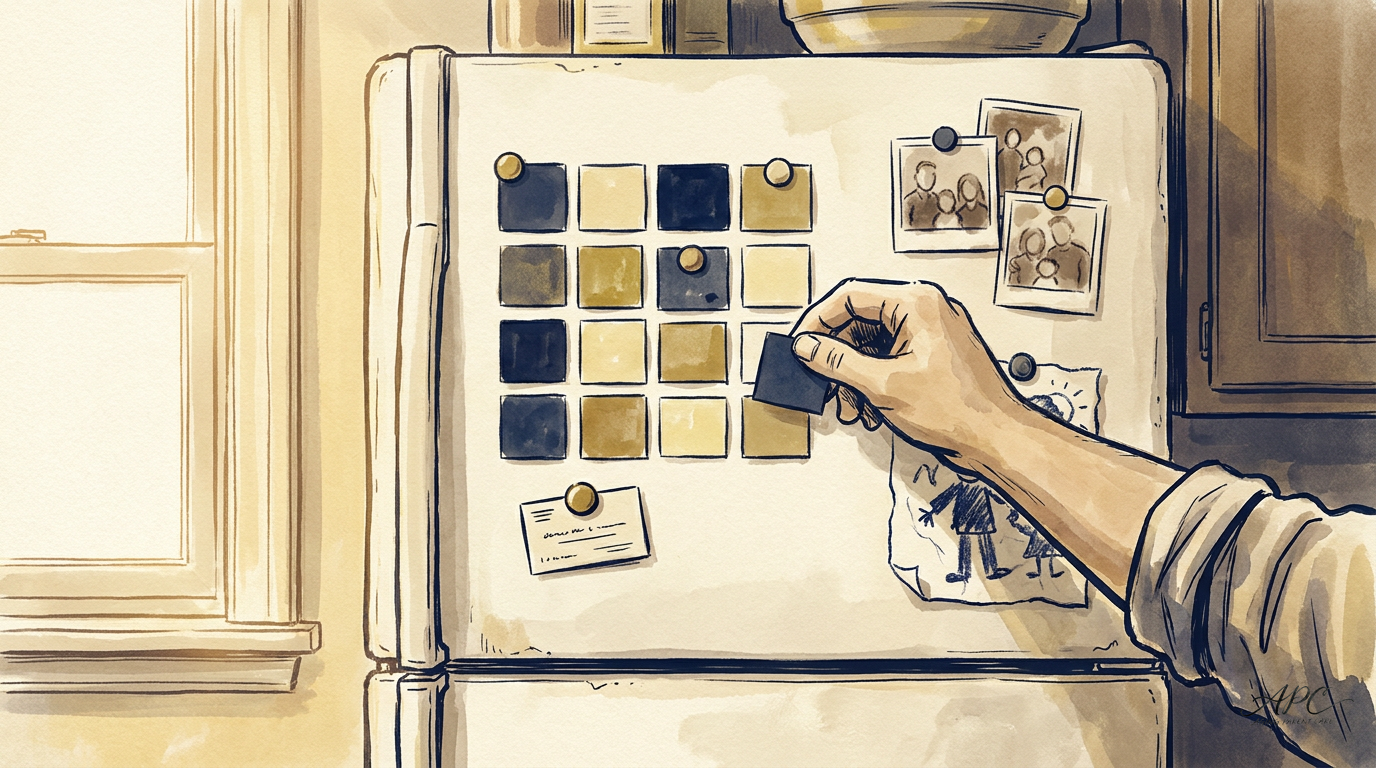
Then there's the layer of support that costs nothing.
- Faith communities. Many churches, mosques, temples, and synagogues have lay ministries or volunteer visitor programs, and membership often isn't required. A call to the office nearest a parent's home can yield a weekly visitor, a meal train, or both.
- Neighbors. A specific ask works better than a general one. "Could you check on my mom on Wednesday afternoons between 2 and 4?" gets a yes more often than "Let me know if you can ever help." People want to help; they just need the help defined.
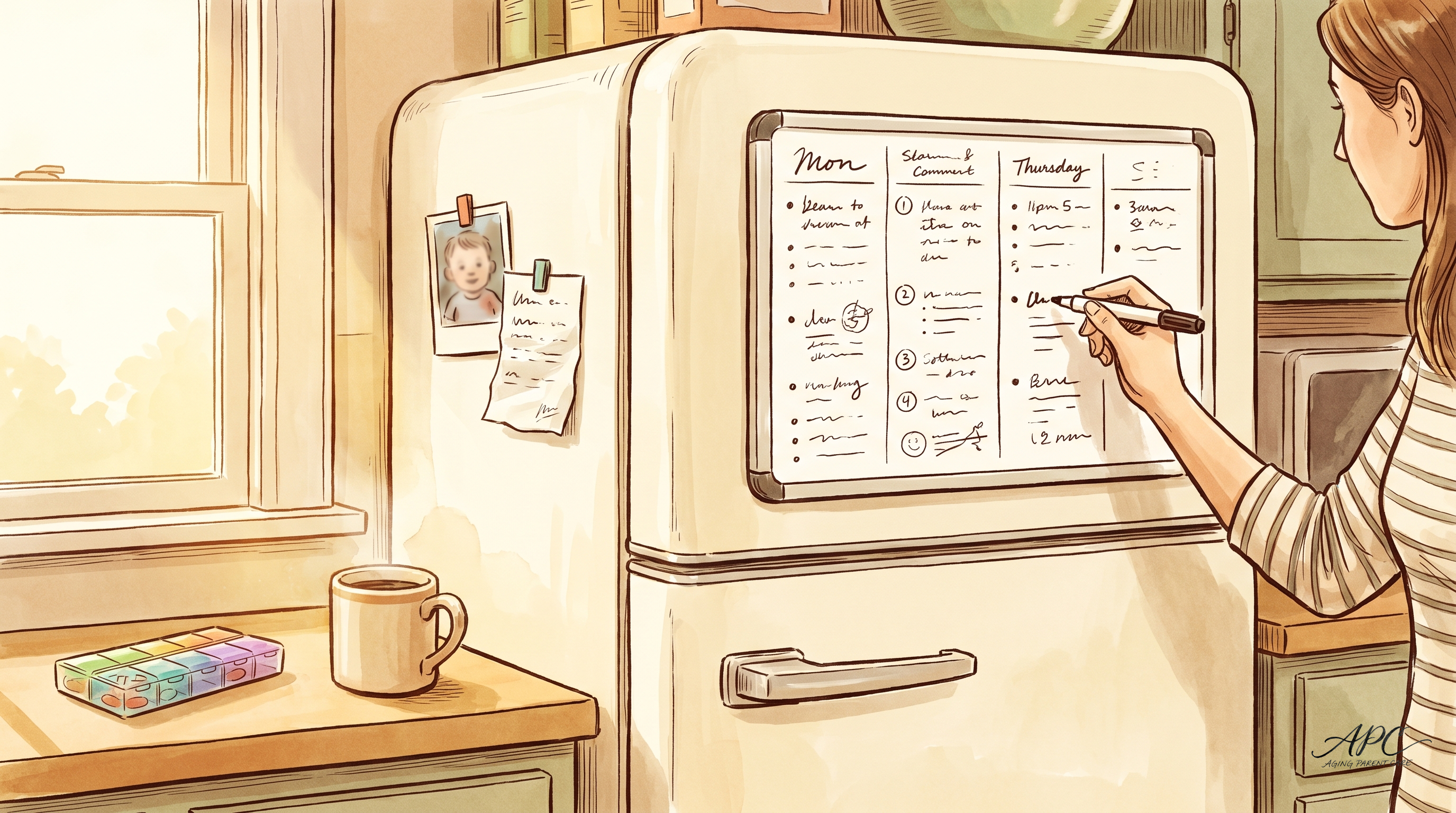
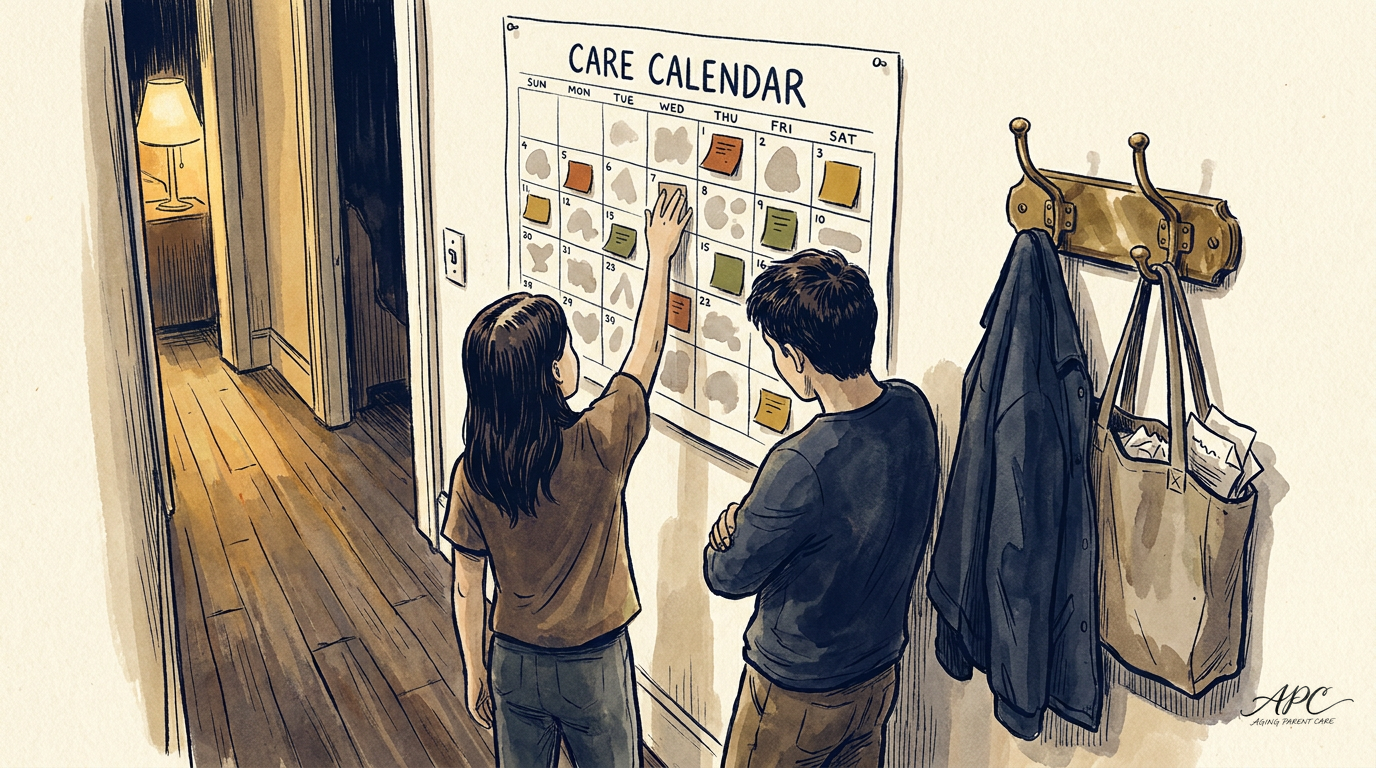
- Care-calendar platforms. Lotsa Helping Hands (lotsahelpinghands.com) and CaringBridge let friends and extended family sign up for specific tasks. The tool handles the coordination instead of fifteen separate texts.
Asking isn't admitting defeat. It's building infrastructure.
The Sibling Conversation
This is the piece many caregivers find hardest. A sibling who calls on Sundays but does nothing else can still be asked for a concrete contribution. Not a guilt trip. A specific request: "I need you to take over medication management remotely using the PillPack app. It takes ten minutes a day." Or: "I need you to fund eight hours a week of home health aide time. That's $224 a week at current rates in Mom's area."
Siblings who won't show up physically can sometimes contribute financially or administratively. But they rarely offer. The ask has to come, and it has to be specific. If the conversation fails, let it fail, and build the care plan around resources that actually show up.
What a Realistic Care Team Looks Like
Put together, a workable team distributes the weight across several shoulders.
- Area Agency on Aging. Provides a care needs assessment and connects you to local meal delivery and transportation.
- A respite program. Six to eight hours of weekly coverage.
- A neighbor. Checks in twice a week.
- A faith-community volunteer. Visits once a week.
- A free online care calendar. Coordinates the schedule.
- A support group or therapist. Many are free through the Caregiver Action Network (caregiveraction.org).
That's a team. It's imperfect, and there are gaps. But it's the difference between one person carrying everything and one person at the center of a structure that distributes the weight.
A shared care-coordination app for family teams
Where we land on the simplest way to assign tasks, schedules, and medication reminders across a care team, with the trade-offs stated plainly.
A recommendation slot for a related tool. We may earn a commission, never on a recommendation. This space is reserved and is not yet live.
Room
Marta Jimenez found her Area Agency on Aging in October. By December, her mother was attending an adult day program three mornings a week. A church volunteer started coming on Saturday afternoons. Marta's brother still calls on Sundays, but now he also pays for four hours of weekly aide time.
Marta still hasn't slept past 6 a.m. But last Tuesday, she went to the dentist for the first time in two years. She sat in the waiting room and read a magazine. The whole magazine.
A care team doesn't buy freedom or rest, exactly. It buys room, built one funded program and one specific ask at a time.
Sources
- National Alliance for Caregiving and AARP. Caregiving in the U.S. 2020.
- Administration for Community Living. National Family Caregiver Support Program.
- Eldercare Locator. Administration for Community Living.
- ARCH National Respite Network. What Is Respite Care?
- U.S. Department of Veterans Affairs. Program of Complete Assistance for Family Caregivers.
- KFF. Medicaid Home and Community-Based Services: Enrollment and Spending.
This article is for educational and informational purposes only. It does not constitute medical or financial advice. Always consult qualified professionals for guidance specific to your situation.
© 2026 Aging Parent Care. All rights reserved. No portion of this article may be reproduced, distributed, or used in any form without the explicit written permission of Aging Parent Care.
Make Your Business Online By The Best No—Code & No—Plugin Solution In The Market.
30 Day Money-Back Guarantee
Say goodbye to your low online sales rate!